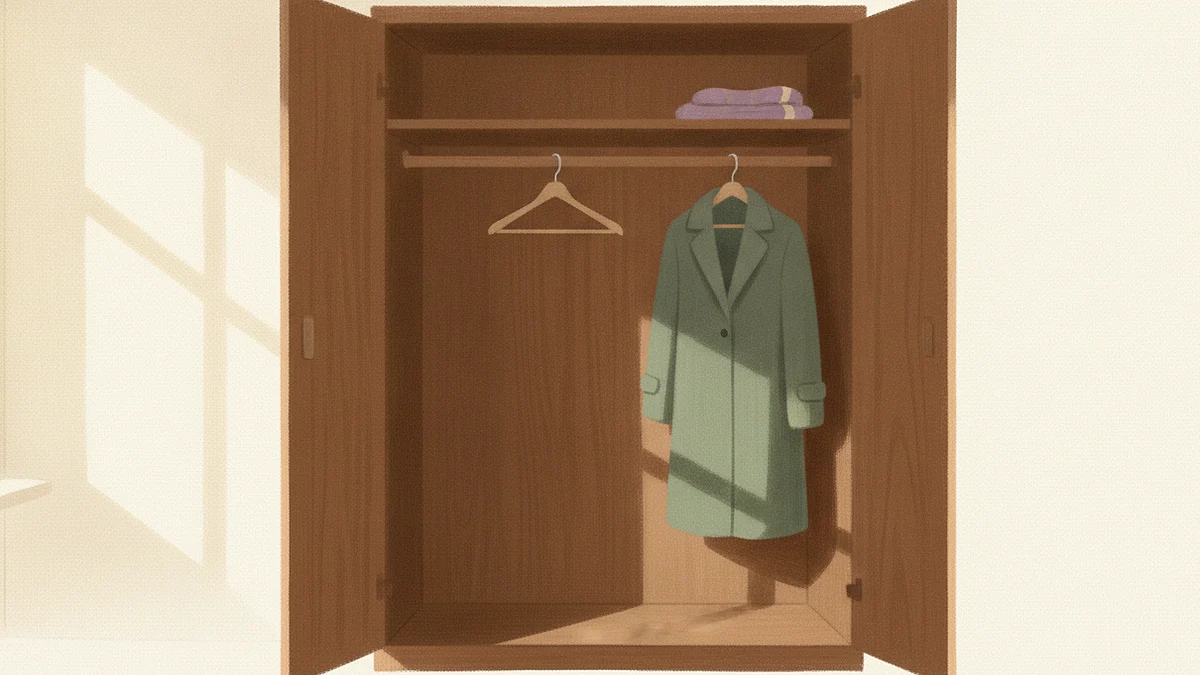
How to date a widower is mostly an ordinary dating question with three unusual features attached. His last marriage did not fail, it stopped. The people around him knew and liked his wife. And certain dates in his year carry weight you cannot see on a calendar.
How to date a widower refers to the practical questions — pace, his late wife, his children, his house — rather than to any technique for handling someone’s grief. This page is the practical version: how to set pace, how to talk about her, what to do about his children and his house, and which conversations cannot be skipped. It is written by editors, and it does not treat a grieving man as either a project or a defect.
How do you set the pace with a widower?
Agree out loud what this is and how fast it is going. Most of the misunderstanding in these relationships comes from two people privately guessing at each other’s speed and each concluding the other is being unfair.
Widowers move at unpredictable rates, and both directions are normal. Some who were long married know exactly what marriage is and see no point in a two-year audition. Others can plan a fortnight ahead and no further, and mean it literally.
Neither speed tells you much on its own. What tells you something is whether he can say which one he is in. For example, “I want to see you weekly and I am not ready to meet your family yet” is a real answer with a position in it, and you can plan around it.
So ask the flat question early, and ask it about behaviour rather than feelings: what do you want this to look like in three months. If the answer is warm and contains nothing you could repeat back the next day, you have not been told anything yet.
One pattern worth expecting: a retreat immediately after something goes well. Guilt tends to arrive on a delay, and a good weekend is often what triggers it. What matters is what happens within a week or two, not the retreat itself.
How do you talk about his late wife?
Ask about her once, honestly, and let him choose the depth. Then leave the subject open rather than managing it. Almost every mistake in this area is an attempt to be tactful that lands as a ban.
Her name is not a hazard. He was married for a long time and she is in the ordinary furniture of his stories, such as the holiday, the house, the joke about the car. Treating each mention as a crisis teaches him to edit his own life in front of you, which is corrosive in a way that takes months to show.
The distinction that actually matters is between memory and instruction. How she laughed at something is a memory. How she kept the kitchen, delivered while you are standing in it, is a standard being applied to you. A memory is something offered. A standard is something applied. The first is intimacy. The second is a role with a previous occupant and a fixed job description.
If you cannot tell which is happening, use the simple test: does it make him sad, or does it make you smaller.
What not to do: do not ask him to rank you against her, do not ask whether he loved her more, and do not tell him she would want him to be happy. He has heard that from everyone who knew them both, and it is not yours to say.
 Illustration
Who are you actually dating, statistically?
Widowhood in the United States is concentrated in later life and heavily weighted towards women, which shapes almost everything about how a widower arrives in a relationship.
The National Center for Family & Marriage Research at Bowling Green State University reports that in 2022, 10.3% of U.S. men aged 65 and older were widowed, compared with 29.5% of women that age. Across all adults 65 and older, 20.9% were widowed in 2022, down from 35.3% in 1990.
Timing is concentrated as well. The U.S. Census Bureau, using 2016 data, found that among Americans widowed in the previous 12 months, 71% of men and 69% of women were aged 65 or older, while people 65 and over made up only 19% of the population aged 15 and over.
Two practical consequences follow. First, he is often the only widower he knows. Widowed women tend to have other widowed women around them; widowed men frequently have nobody to compare notes with and have never said most of this out loud to anyone.
Second, there is usually an established family in the picture — adult children, in-laws, a house with thirty years in it. That is the terrain, not an obstacle course someone built for you.
On re-partnering, Pew Research Center reported in 2025 that widows are less likely than divorced adults to remarry, and that women are much more likely than men to be widowed. Pew writes that about women; it publishes no widower remarriage rate, so it says nothing about him. This site publishes no widow-specific remarriage percentage, because no primary source we could read separates the widowed from the divorced. Every figure we use is listed on our statistics page.
How do you handle his children?
Mostly by letting their father handle them. Adult children are usually harder than young ones, and their reaction is rarely about you. A parent’s new relationship moves furniture they assumed was fixed: the house, the holidays, the objects, the sense that the family they grew up in is now formally over.
Neither group owes you a welcome. What you can reasonably expect is that their father handles them himself — that he tells them, that he says when he intends to, and that he does not leave the subject permanently unopened in the hope that you stop noticing.
Being frightened of that conversation is ordinary. Refusing to have it for a year is a decision.
The editorial position on your own role: be consistently ordinary over a long period, do not compete for the parental slot, and do not require warmth on a schedule. Warmth that arrives in year three is worth more than politeness manufactured in month two.
Younger children need less warning and more consistency. The thing to avoid is being installed quickly as a replacement, which serves the adults’ timetable rather than the child’s.
The house and its objects
Photographs, clothes in the wardrobe, her handwriting on the kitchen calendar, the side of the bed. These get settled by time and negotiation, not by demands, and they are the most common flashpoint in the first year.
The wrong request is subtraction. A man who takes her picture off the wall to keep you comfortable has not made room; he has made a concession, and he will resent it eventually.
The version that works is additive. Additive means your things arriving rather than hers leaving — for example, a shelf, a drawer, a mug that is yours, shampoo in the bathroom, eventually a key. Each of these is small, unromantic and highly informative, because each is territory in a house that has been a difficult place for him since she died.
What to watch is not the mantelpiece but access. A house you visit and never inhabit, always by arrangement, with nothing of yours in it after a year, is telling you something that has nothing to do with photographs.
Moving in is the hardest version of this problem, and it is not impossible. Redecorating without discussion is the version that goes badly.
How do you handle the anniversary of her death?
By agreeing in advance what he wants to do with it, rather than working it out on the day. There are dates in his year that will arrive whether or not anyone has planned for them: the anniversary of her death, her birthday, their wedding anniversary, the date of a diagnosis, and Christmas.
Have that conversation once, as logistics rather than as feelings. What is coming, what he expects to be like, and what he wants — to be alone with it, to have you there, or to do something ordinary and not discuss it.
All three answers work. Ambiguity does not. The bad version is the date arriving unannounced, him disappearing into it, and you spending two days trying to work out what you did.
Christmas is the one people underestimate, because it involves everyone else as well: his children, her family, whose house, and which traditions are load-bearing. It is worth raising in October, not on the twentieth of December.
How can you tell when it is not grief?
By pattern, movement, and what happens when you name one concrete thing out loud. Some behaviour in these relationships is not grief wearing an armband.
Going quiet on the anniversary is weather. Going quiet every time the relationship becomes real is a climate. A man who could not discuss the future in March and can in September is grieving. A man in exactly the same position two years apart has an arrangement that suits him.
If every raised subject becomes evidence of your impatience or your failure to understand what he has been through, that is not grief speaking, and no amount of waiting converts it. The full sorting is on widower red flags, and the mirror image — what serious actually looks like — is on 5 signs a widower is serious about your relationship.
If you are the widowed one reading this
Some people arrive here having lost a spouse themselves and wanting to know how to start again rather than how to handle someone who has.
The practical part is smaller than it feels. Decide in advance what you will say about your marriage, in two sentences, so you are not composing it at a table. Expect the first evening to be strange regardless of who is sitting opposite. One bad evening is information, not a verdict on whether you are ready.
The venues are ordinary — introductions, interest groups, dating platforms — and the platform question, including which parts are actually free, is covered on widow and widower dating sites. Timing from your side is on dating after losing a spouse.
What we do not recommend
- Do not audition. Proving you are more understanding than the last person he dated is not a relationship, and the standard only rises.
- Do not ask for her to be removed. Photographs, names, dates and in-laws are twenty or forty years of a life, not a rival’s belongings.
- Do not become staff. Meals, appointments, reminders and emotional interpreting of his own children to himself, with nothing reciprocal, is a job. If you can list what you have taken on and cannot name one thing he has taken on for you, that is the situation.
- Do not entangle money early. Loans, joint payments or being moved in before anything else has a shape are worth refusing in either direction, and widowed people are targeted for fraud precisely because loss is public.
- Do not take legal or financial guidance from articles like this one. Wills, pensions, survivor benefits and remarriage clauses are decided by documents and agencies, not by websites. Ask each scheme in writing.
Where grief needs more than a partner
Grief itself is not an illness, and most of what happens in these relationships is ordinary difficulty. But prolonged grief disorder was added to the DSM-5-TR by the American Psychiatric Association in 2022, so a grief that stays at full intensity and stops someone functioning is something a clinician can name and treat.
Where it stops looking ordinary — a person who cannot function months on, grief that has not moved at all over a long period, or any thought of not wanting to be alive — that belongs with a doctor or a bereavement service. So does the version where this is eating your own sleep and your friendships. We are editors, not clinicians, and no article is a substitute for that conversation.
A note on how this page is written
Nothing here is presented as testimony. Marten Elder, the widower who contributes to this site, appears only in confirmed, dated quotes, and we have none from him on this subject, so no quote is printed in his name. We have not collected reader accounts, and nothing above is one.
Where to go next
For the wider picture, see dating a widower. If the question is what the words mean and what changes at a second marriage, widow and widower and marrying a widower or widow cover it. If you are the widowed one, life as a widow or widower is the ground floor underneath all of it.